Teen Emotional Well-Being Through Art: My Journey Creating Adolescence
The Moment I Realized We Don’t Truly Listen to Teenagers
I still remember standing in front of a group of students after one of my earlier installations. They were polite, quiet, nodding – but something in their silence felt louder than any applause. Their expressions carried an invisible tension, a kind of protective armor.
Later, when I spoke to a teacher, she said, “They rarely open up. Even when something hurts, they just say it’s fine.” That conversation stayed with me for months.
As an artist, I’ve always believed that art begins where words end. But in this case, it wasn’t about my words – it was about theirs. Or rather, their absence. I started noticing how often adults speak about teenagers instead of with them.
When Save the Children Lithuania (Gelbėkit vaikus) approached me about transforming their nationwide survey of 1,165 children into a piece of art, I immediately said yes. Reading the results was both heartbreaking and illuminating.
Many children described feeling unheard, unseen, or emotionally exhausted – yet they also expressed hope that someone might finally take time to understand them. That hope became the foundation of my installation Adolescence.
Click here to watch a short video about Adolescence
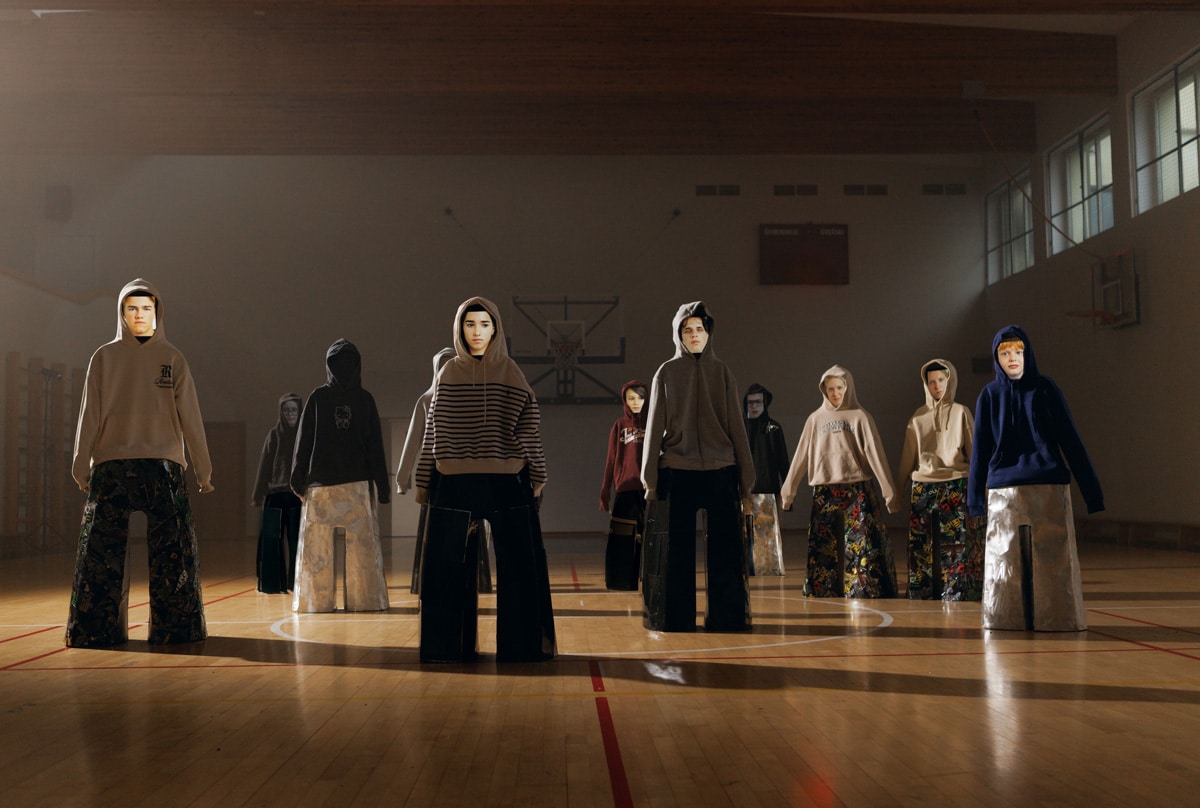
I wanted to build not a sculpture, but an experience. A physical space where adults could step into the presence of teenagers – not as observers, but as participants in a silent conversation.
In creating Adolescence, I realized that listening is not passive. It requires humility, patience, and vulnerability. The kind that asks us to look beyond behavior and see emotion; beyond rebellion and see fear; beyond silence and hear the story inside.
This installation became my way of saying: let’s listen again.
How a Conversation with Save the Children Lithuania Sparked Adolescence
Every project I’ve ever created begins with a question that keeps me awake at night. This one started with a phone call. Save the Children Lithuania reached out with an idea – to turn the findings of their new nationwide survey into something that could be felt, not just read.
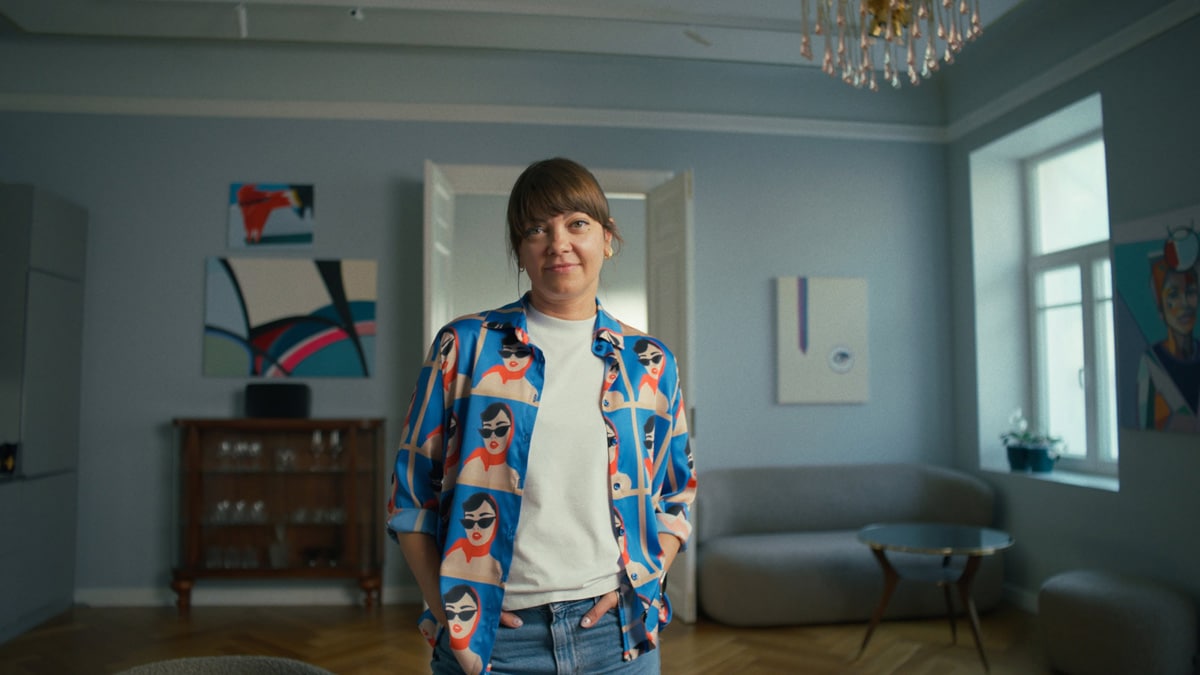
At first, I hesitated. Translating statistics into emotion isn’t easy. But once I opened the survey of 1,165 children, I realized it wasn’t just data – it was a collective diary of how today’s teenagers truly feel.
To bring the survey’s voices closer, we created this short video together with Save the Children Lithuania.
Those words struck a nerve. They revealed a generation standing between confidence and fragility, hyperconnected yet emotionally isolated.
Together, we decided to create Adolescence – not as a campaign or lecture, but as a conversation in space.
Reading the Survey: 1,165 Voices of Children
When I first opened the Children’s Emotional Well-Being Survey, 2025 (PDF), I didn’t expect it to shake me so deeply.
Among the 1,165 young voices, I found a pattern – not of rebellion, but of quiet pain and unspoken hope. Many said they didn’t feel heard or that their emotions were dismissed as “overreactions.”
Reading those lines, I began to imagine what silence looks like – not as emptiness, but as protection. That idea became central to Adolescence: to create figures that stand together, yet apart.
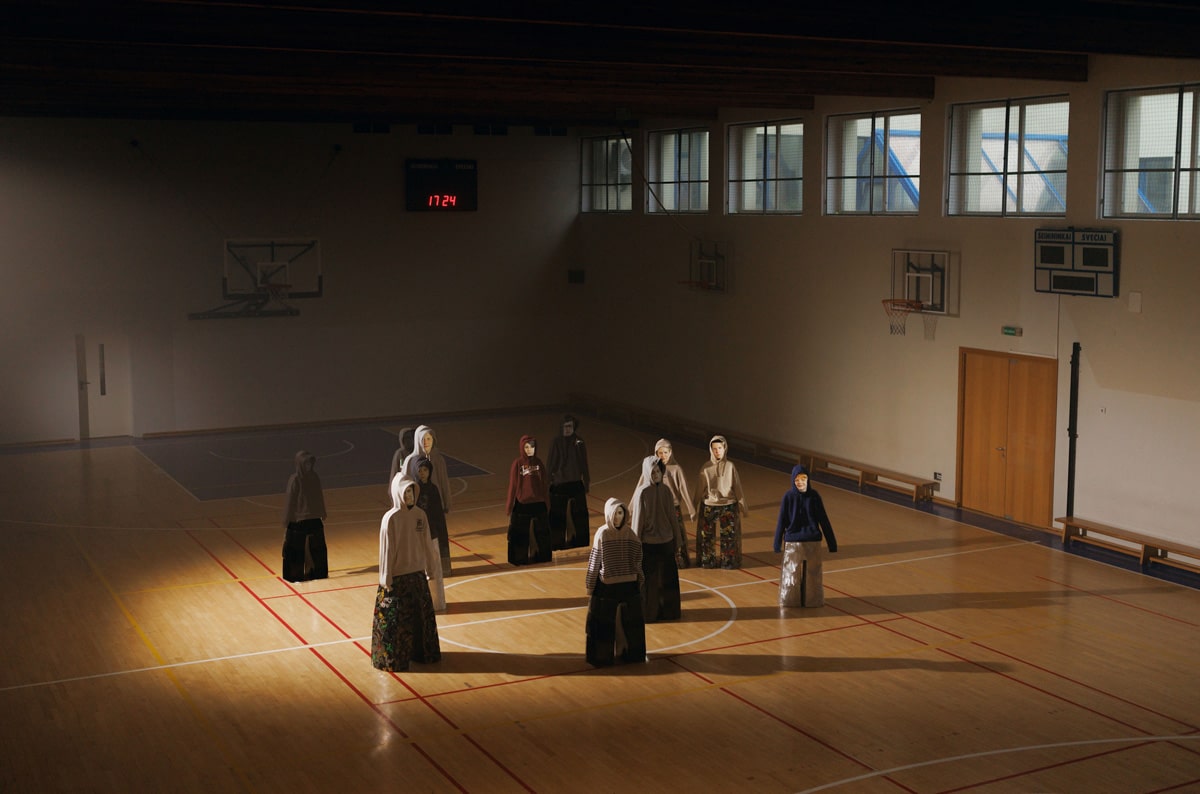
Translating Data into Emotion – My Artistic Approach
I didn’t want to illustrate results – I wanted to transform them. The numbers became raw material like metal, fabric, and light.
Every choice came from emotion: steel for tension, hoodies for protection, space for empathy.
Choosing Materials that Mirror Vulnerability and Strength
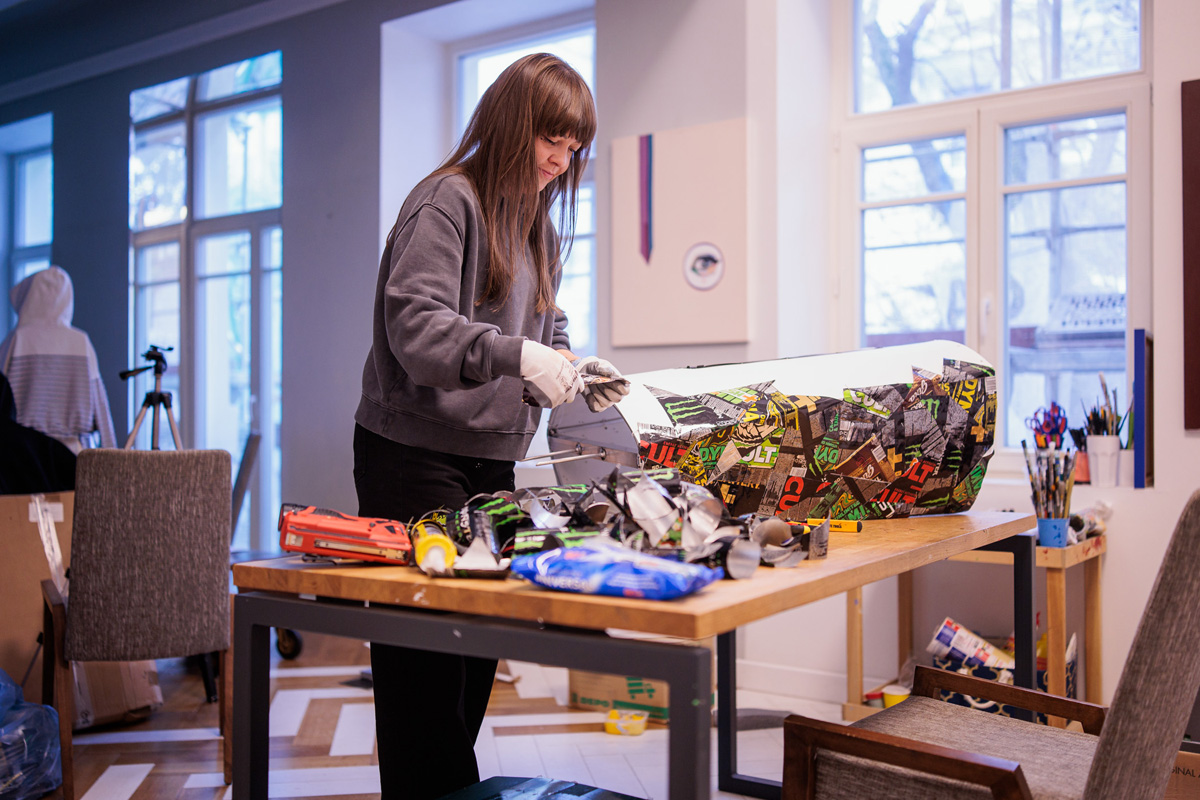
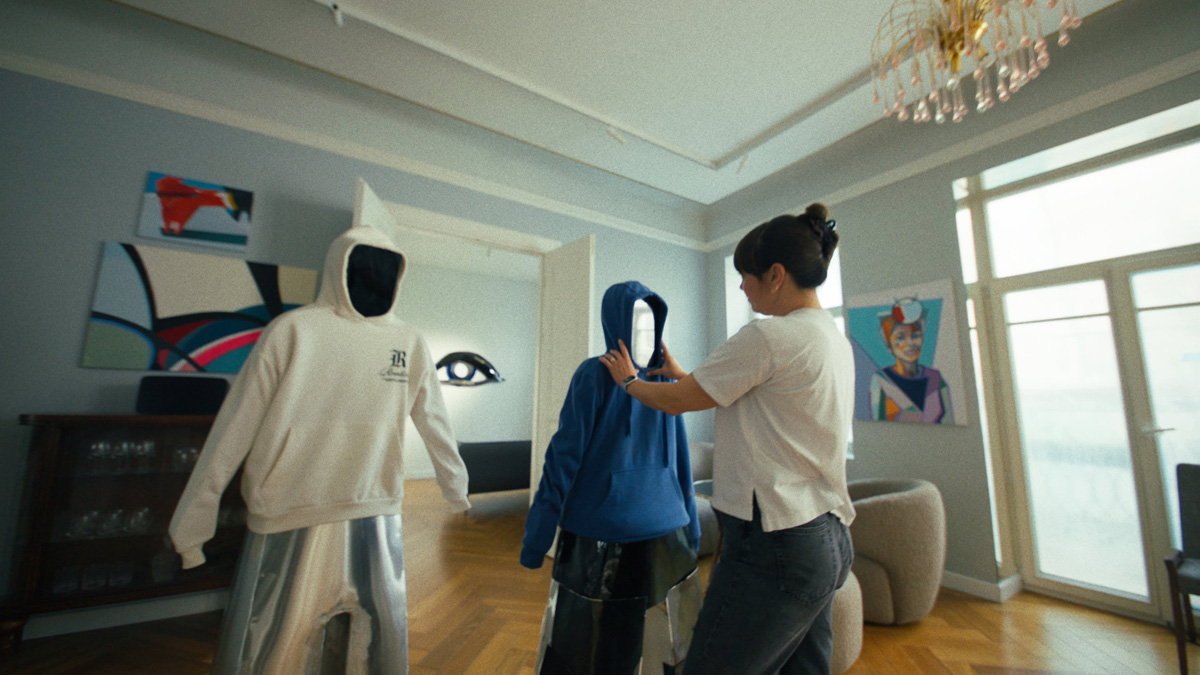
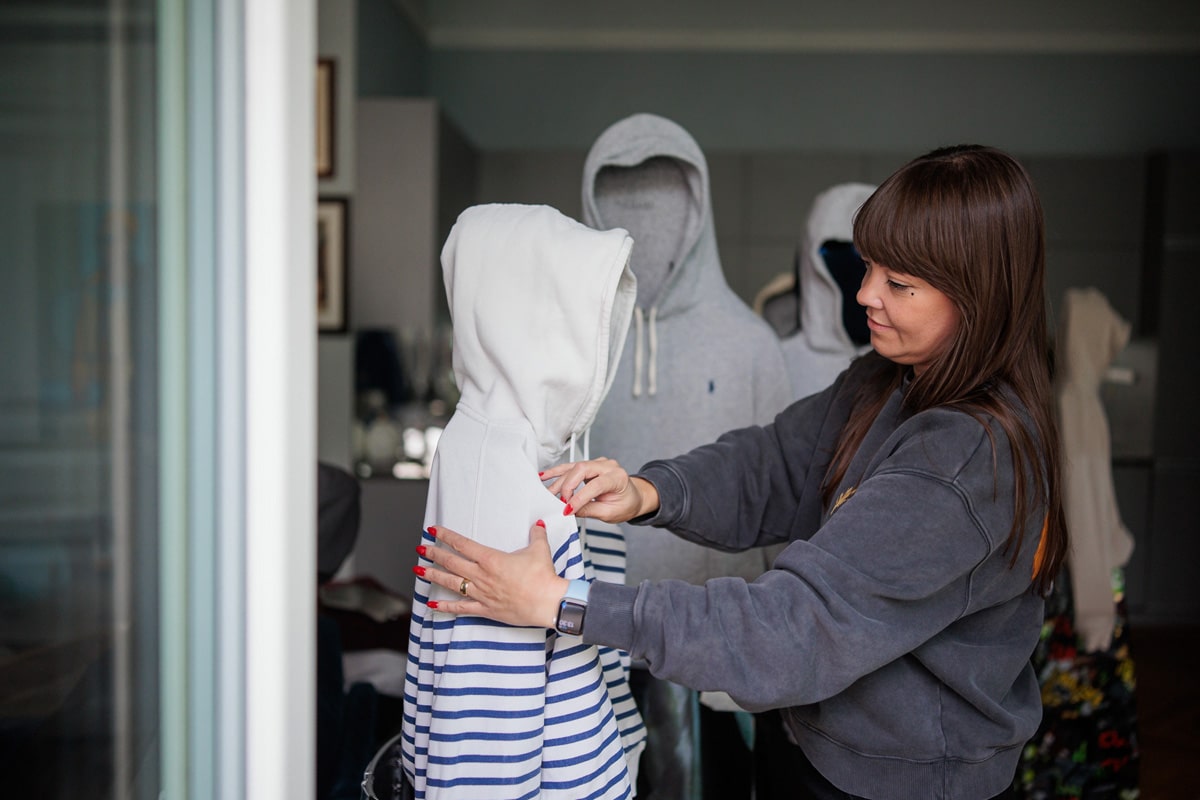
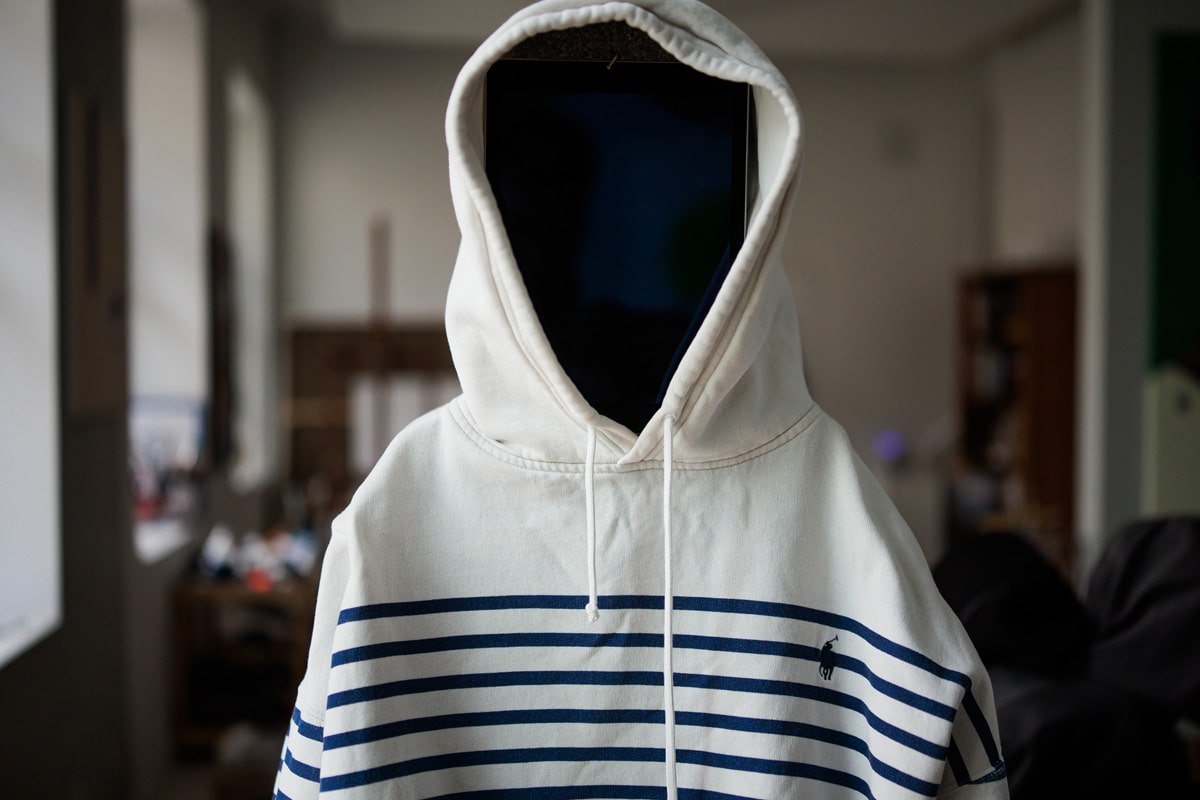
Steel became the backbone – cold yet human once touched by hand. Hoodies acted as emotional skins, both comfort and disguise.
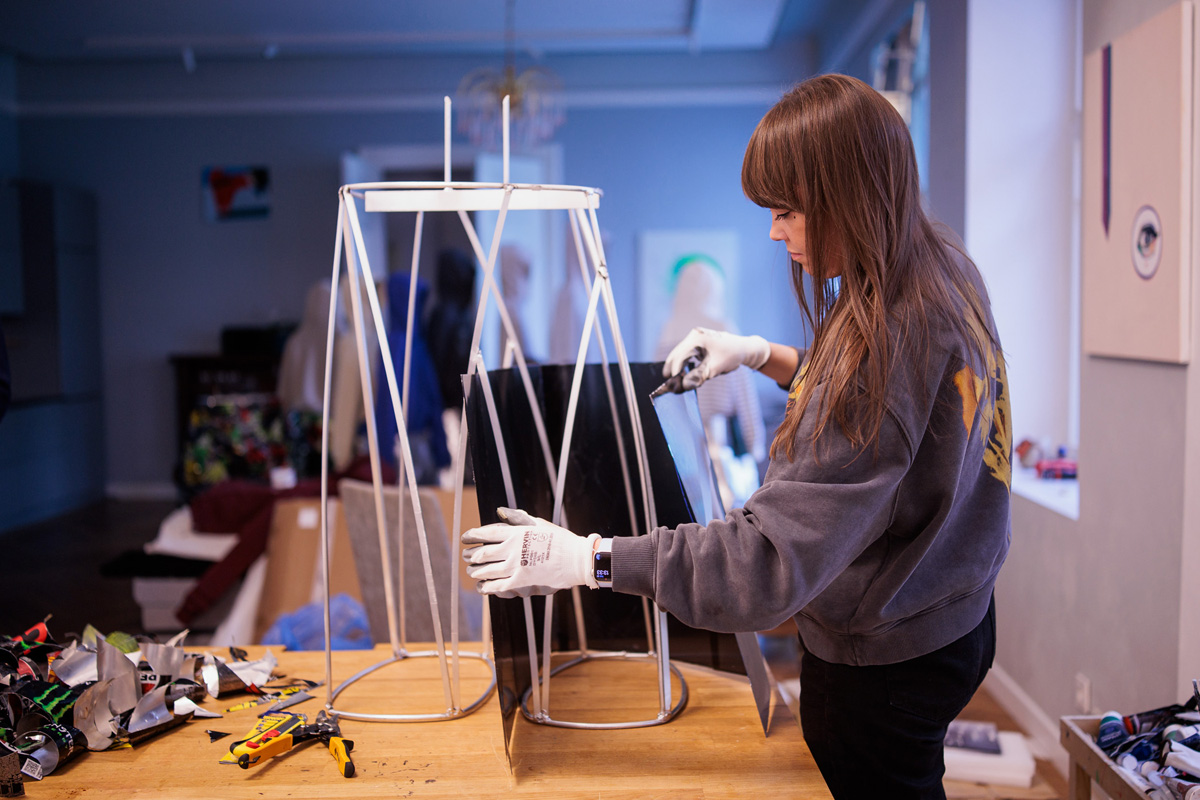
Recycled reflective surfaces became mirrors for emotion—visitors see themselves, not the faces of others.
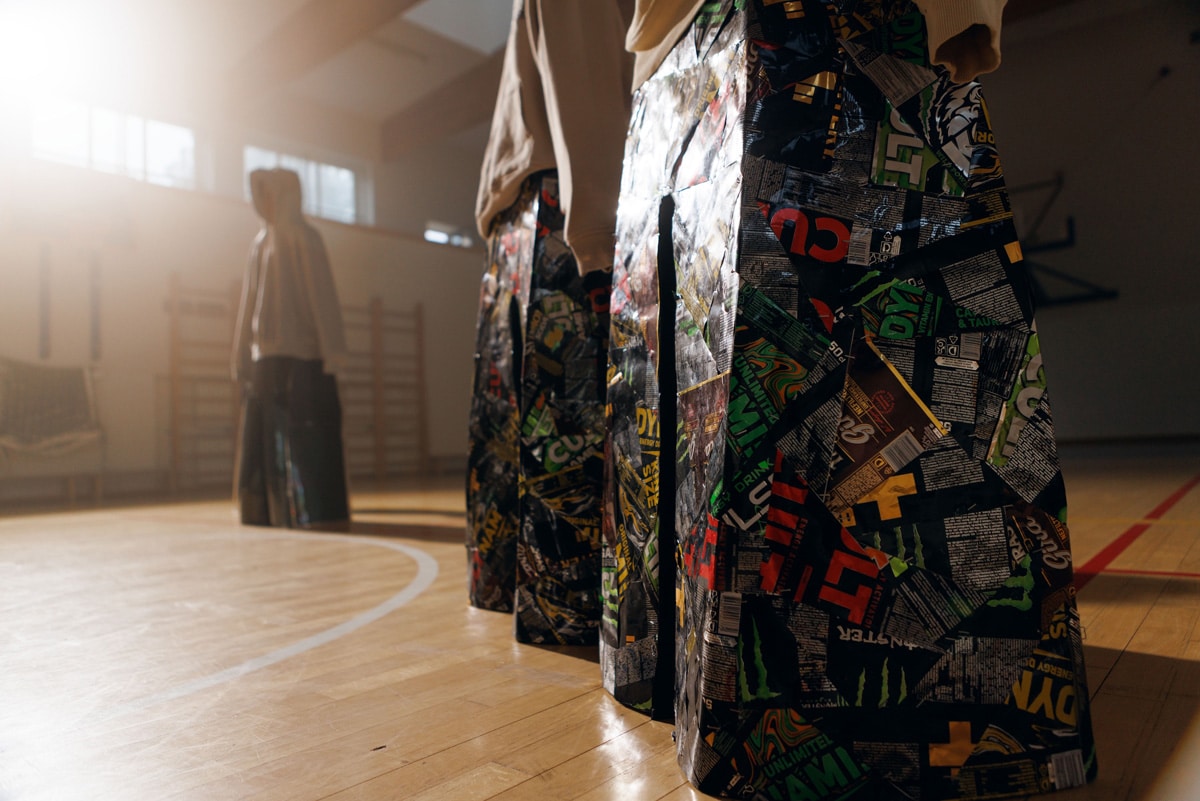
From Sketch to Structure: The Making of Each Figure
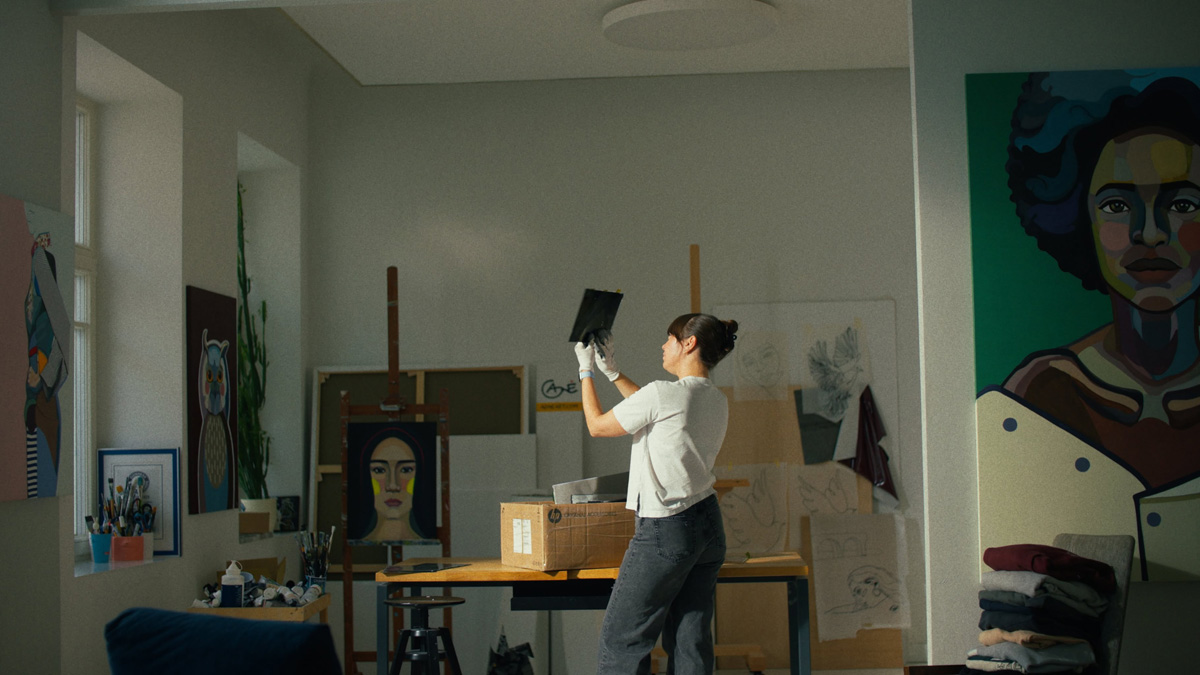
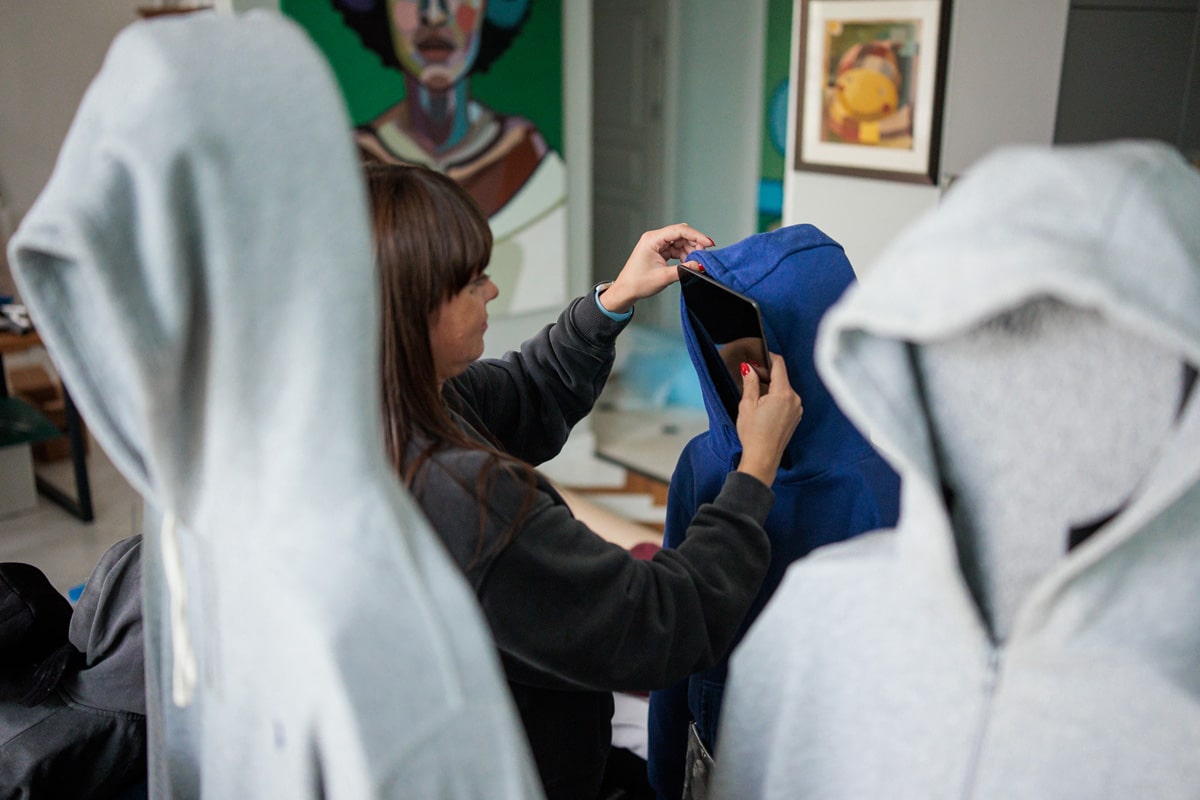
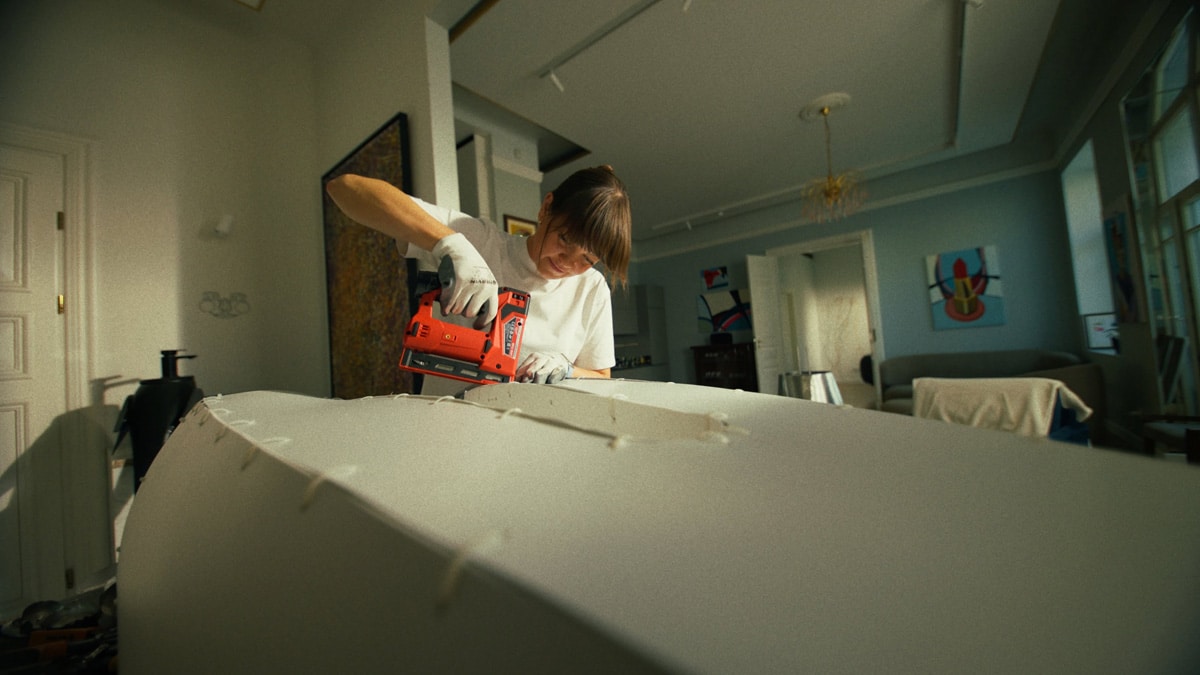
Each figure began as a sketch, then a steel skeleton, then a textile body.
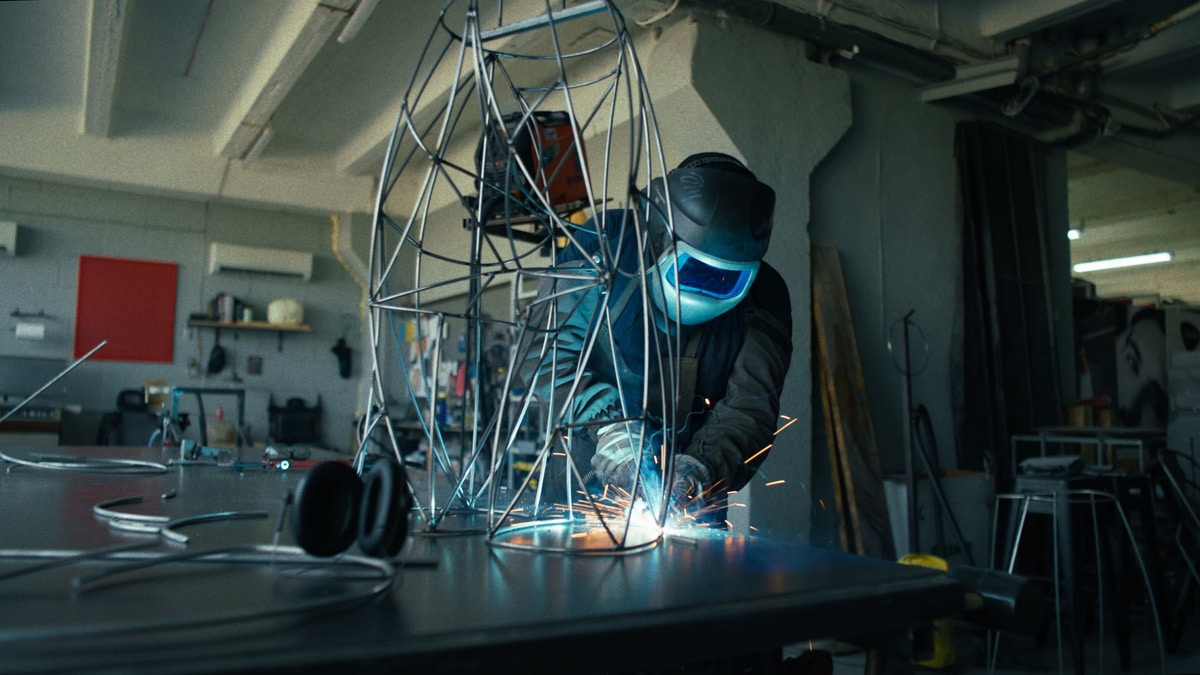
In the studio, silence became part of the process. Each hoodie softened the steel, turning data into empathy.
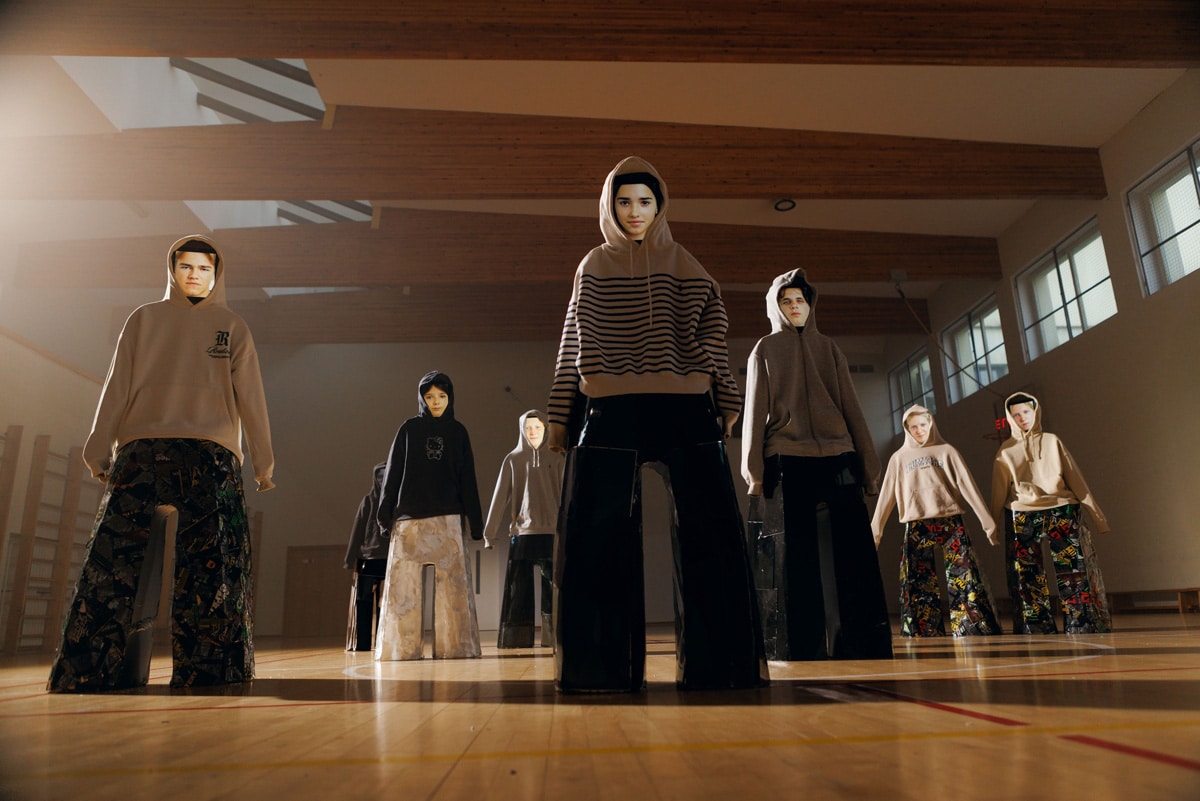
Why I Chose the School Gym as a Symbolic Space
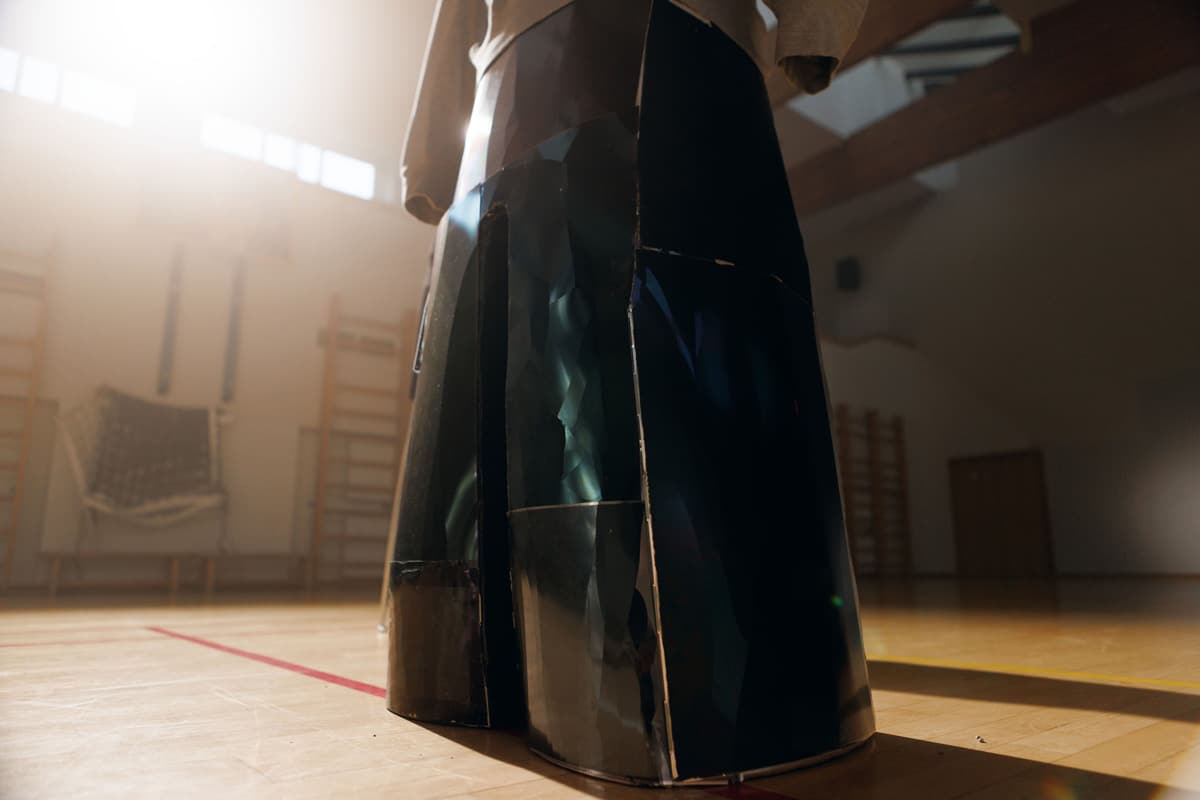
The gym carries every emotion of youth – competition, fear, laughter, failure.
The still figures transformed it into a reflective temple of memory rather than noise.
Faces and Hoodies: The Visual Language of Adolescence
The figures have no faces. That choice invites projection – viewers see someone they know or once were.
The hoodie is the modern armor of youth – soft protection against a world that demands too much visibility.
Collaboration and Craftsmanship – The Metalwork Behind the Scenes
Behind every quiet figure is a team that helped build empathy in steel.
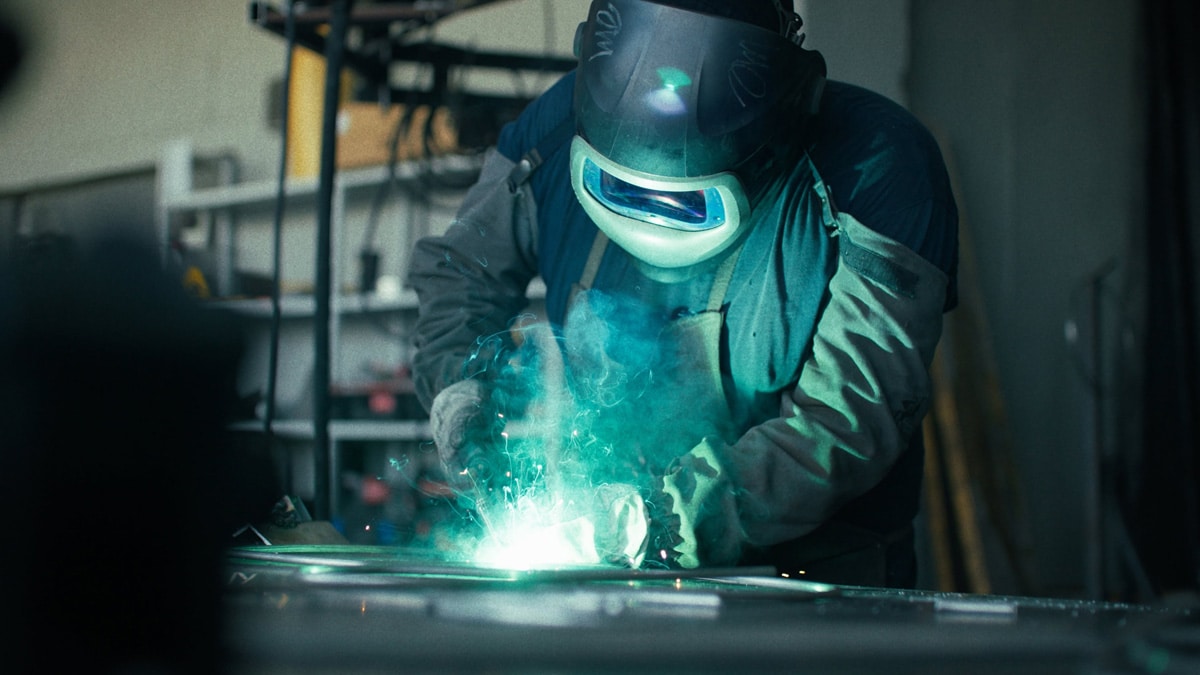
Their precision gave form to fragility. We left imperfections visible – they are part of the truth.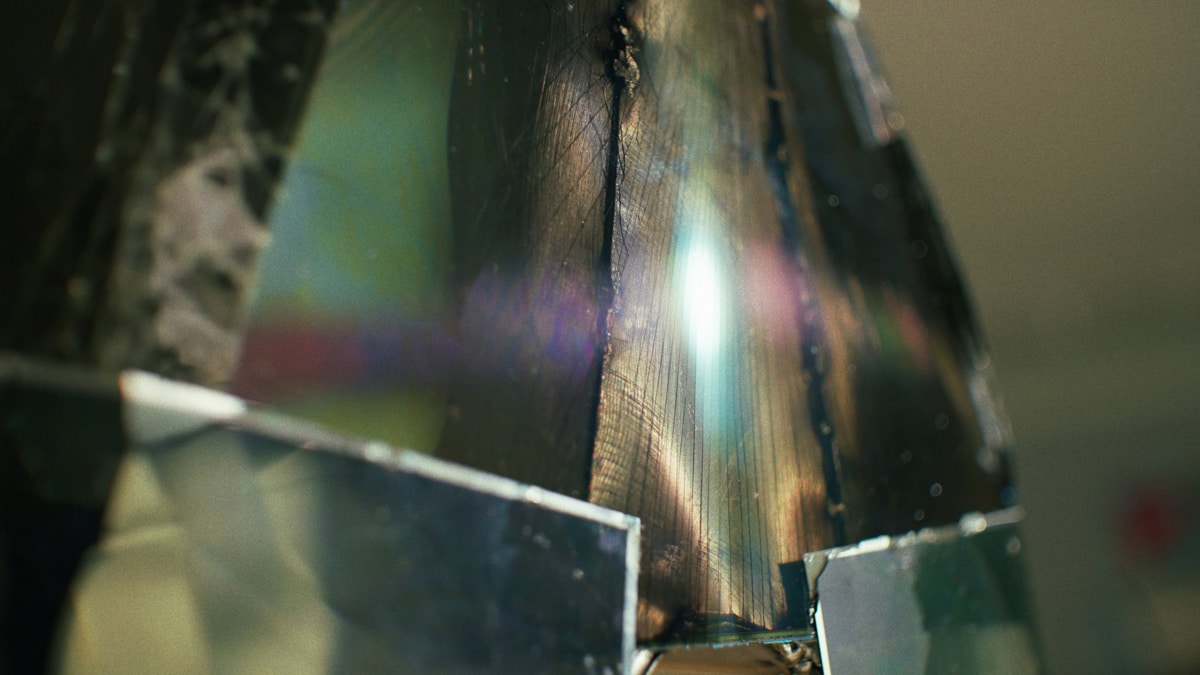
Emotional Well-Being as Artistic Responsibility
As an artist, I see creation as a responsibility – to make emotion visible where others turn away.
Art cannot fix pain, but it can hold space for recognition.
What the Survey Taught Me About Listening
Re-reading the survey, I realized listening means sensing what remains unsaid.
If art can make someone pause and call their child simply to ask “How are you, really?” – that’s impact.
Visitors’ Reactions – What Adults Felt Inside the Installation
Some cried. Some whispered. Some remembered who they were.
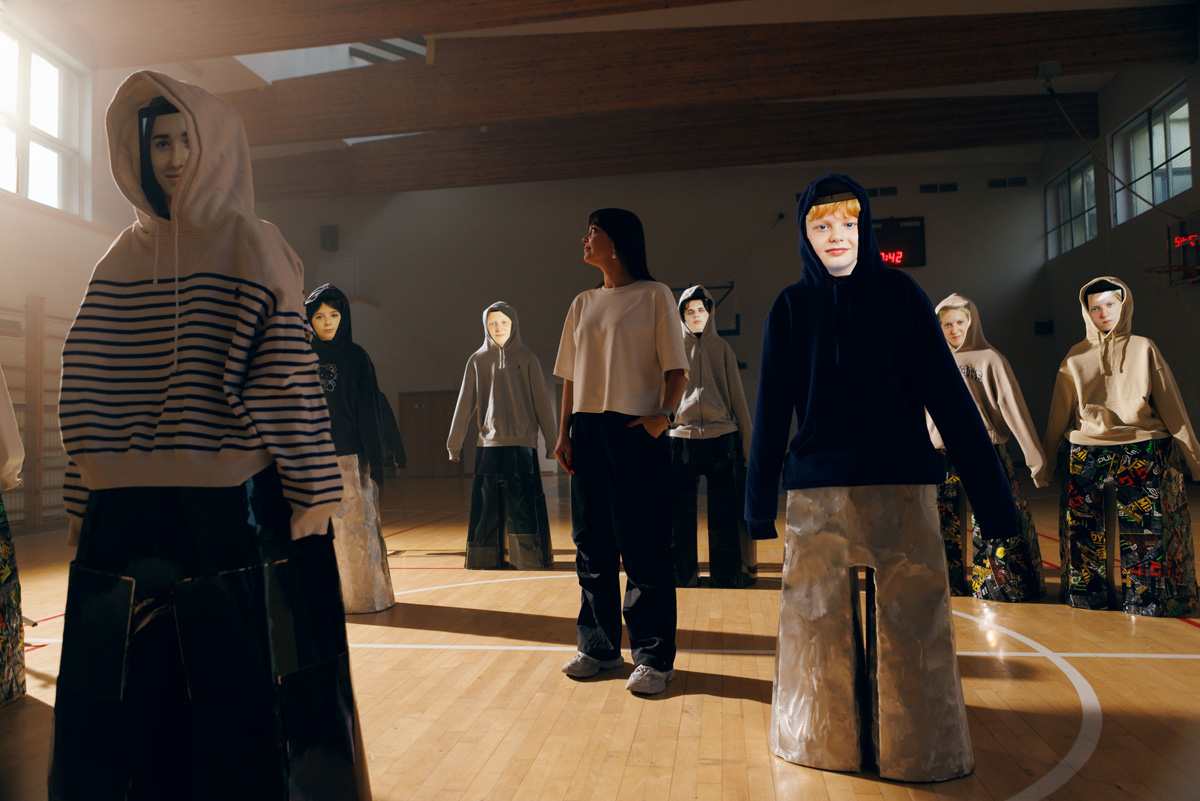
The installation became less about teenagers and more about us.
Why Teen Emotional Well-Being Should Matter to All of Us
Teen emotional well-being reflects society’s emotional health. Their silence echoes ours.
Art as a Bridge Between Generations
Every visitor brings their own past. Adolescence becomes a meeting point between memory and understanding.
Quick Takeaways
- Adolescence transforms survey data on teen emotional well-being into immersive art.
- Created in collaboration with Save the Children Lithuania, based on 1,165 children surveyed.
- Materials: steel, recycled elements, textiles, and diffused light.
- Faceless figures invite empathy and reflection.
- Set in a school gym, symbolizing everyday teenage life.
- A bridge between data and emotion, adults and teens.
FAQs
1. What inspired Adolescence?
The 2025 Save the Children Lithuania survey revealed how many teens feel unheard.
2. Why are the figures faceless?
To allow visitors to project their own emotions and memories.
3. Why a school gym instead of a gallery?
Because it’s a real space of teenage life – raw, honest, and emotionally charged.
4. What materials were used?
Steel, textiles (hoodies), recycled metal, and soft lighting.
5. How can people experience Adolescence online?
Watch the official video and explore agneart.com.
Conclusion – An Invitation to Listen
Creating Adolescence changed how I understand empathy.
Every teenager carries emotions waiting to be heard. Stand among them, take a breath, and listen – not with your ears, but with your memory.
References
- Save the Children Lithuania (2025). Children’s Emotional Well-Being Survey. PDF link
- World Health Organization (2024). Adolescent Mental Health. WHO Fact Sheet
- UNICEF (2024). Supporting Teen Mental Health. UNICEF
- OECD (2023). Emotional Well-Being of Children and Adolescents. OECD
- Frontiers in Psychology (2024). Fostering Emotional Well-Being in Adolescents. Frontiers Journal
💬 Share Your Thoughts
If Adolescence resonated with you, I’d love to hear your reflections.
Did it remind you of your own teenage years or of someone you care about now?
Please share on social media using #AdolescenceArtProject or leave a message on agneart.com/contact.